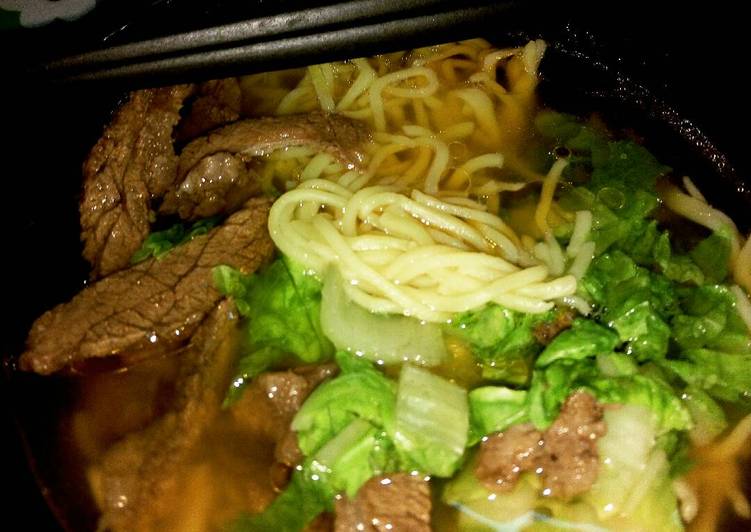
Hey everyone, it’s me, Dave, welcome to our recipe site. Today, I will show you a way to make a distinctive dish, pinoy mami (street style ramen noodles). One of my favorites. This time, I am going to make it a bit tasty. This will be really delicious.
Pinoy Mami (street style ramen noodles) is one of the most popular of current trending meals in the world. It’s appreciated by millions every day. It is easy, it’s fast, it tastes yummy. Pinoy Mami (street style ramen noodles) is something that I’ve loved my entire life. They are fine and they look wonderful.
The name for this style of serving meals comes from the practice of "pairing" the meal with garlic fried rice and a light beef broth soup. Street Food Philippines Hungry Fish Eye. Pinoy Mami (street style ramen noodles) Recipe - Yummy this dish is very delicous. Discover step by step How to Make Pinoy Mami (street style ramen noodles) in your home.
To get started with this particular recipe, we have to first prepare a few ingredients. You can cook pinoy mami (street style ramen noodles) using 15 ingredients and 8 steps. Here is how you cook that.
The ingredients needed to make Pinoy Mami (street style ramen noodles):
- Take fresh egg noodles
- Prepare chicken bullion or 2 cups chicken stock
- Make ready beef bullion or 2 cups beef stock
- Make ready garlic crushed and minced
- Take small shallots or red onion
- Prepare soy sauce
- Get oyster sauce
- Take kilo beef (tenderloin or other tender parts)
- Prepare small lettuce or pechay chopped
- Make ready water
- Prepare ground pepper
- Make ready fish sauce
- Prepare salt (beef rub)
- Prepare ground pepper (beef rub)
- Prepare few onion leaves for garnishing (optional)
Hokkaido-style shoyu ramen, made of chicken broth and topped with thin ramen noodles and fatty Chef John Sugimura dedicates his Minneapolis-based, Japanese street food restaurant, PinKU, to Los Angeles, California Tsujita created a quantum shift for ramen when Tokyo master Takehiro. A wide variety of spicy ramen noodles options are available to you, such as style. The noodle is dried and not fried, giving it a bit lower amount of fat. Charumera refers to the horn that is used by the street vendors in Japan to let people know 'hey - come get your noodles!
Instructions to make Pinoy Mami (street style ramen noodles):
- (Prepare the beef before hand,overnight or a few hours before you serve the noodles.) Rub the beef with salt and pepper then boil until tender about an or or so, let cool and set aside in fridge if being use a day before.
- In a casserole sautée garlic and shallots until fragrant.
- Add in beef and chicken bullion, (or stocks) stir constantly until dissolved.
- Add the water, oyster sauce, soy sauce, pepper and fish sauce and bring to a boil.
- Boil separately the chopped lettuce or pechay to desired crispness then set aside.
- Prepare the fresh noodles by boiling it in hot water until loosened. Drain then add serving amount to a clean bowl.
- Add the sliced beef and lettuce or pechay to the noodle bowls.
- Add the soup mixture then garnish with onion leaves. Serve while hot.
The noodle is dried and not fried, giving it a bit lower amount of fat. Charumera refers to the horn that is used by the street vendors in Japan to let people know 'hey - come get your noodles! The soup broth for tonkotsu ramen is based upon pork bones, and "tonkotsu" means "pork bones" in Japanese. Find the perfect handmade gift, vintage & on-trend clothes, unique jewelry, and more… lots more. A Noodle Story is one of these innovative stalls, serving up Singapore-style ramen.
So that’s going to wrap it up with this special food pinoy mami (street style ramen noodles) recipe. Thanks so much for reading. I’m confident you will make this at home. There is gonna be more interesting food at home recipes coming up. Remember to save this page in your browser, and share it to your loved ones, friends and colleague. Thank you for reading. Go on get cooking!